

If you’ve been told you might need sinus surgery, your first reaction was probably a mix of worry and questions. Will it hurt? Is it really necessary? How long before I can go back to work? And what if I just keep taking medicines?
These are exactly the right questions to ask. The good news is that sinus surgery today is a far cry from what many people imagine, and for many patients, it’s a last step after medicines have had a fair chance. Here’s a clear, honest guide to when sinus surgery ENT care is needed, and what the journey looks like.
Sinus Surgery ENT: When It’s Needed & What to Expect
First, what do the sinuses do?
Your sinuses are air-filled spaces in the bones around your nose, eyes, and cheeks. They’re lined with a thin layer that makes mucus, which normally drains into your nose through narrow openings. When the lining swells or those openings get blocked, mucus is trapped, pressure builds, and infection can settle in. That’s sinusitis, and when it lasts 12 weeks or more, it’s called chronic sinusitis.
When is sinus surgery actually necessary?
Surgery is rarely the first option. Most people with sinus trouble improve with medicines, saline rinses, allergy control, and lifestyle changes. Your ENT may recommend surgery when:
- Chronic sinusitis continues despite a proper trial of medical treatment, usually for several weeks to months
- Nasal polyps keep blocking the airway or keep coming back
- A deviated septum or other structural problem blocks drainage and breathing
- You have recurrent acute sinus infections that keep returning, even with treatment
- A scan shows persistent blockage of the sinus drainage pathways
- You have fungal sinus disease, or a cyst-like swelling (mucocele) in a sinus
- Rare complications appear, such as infection spreading near the eye or brain, which need urgent attention
- A growth in the nose or sinus needs to be removed or examined
Surgery isn’t usually advised for a single cold-related infection or mild symptoms that respond to medicines. A good surgeon will always tell you when it isn’t needed.
How does your ENT decide?
You’ll typically go through:
- A detailed history, including how long symptoms have lasted and what treatments you’ve tried
- Nasal endoscopy, where a thin camera lets the doctor see the inside of your nose and sinuses
- A CT scan (CBCT) of the nose and sinuses, which maps exactly where the blockage is
- Allergy evaluation, if allergies may be driving the problem
The scan is key. It shows the surgeon the structure of your sinuses, and it can also reveal whether the sinuses are truly the cause of your symptoms.
![Sinus Surgery ENT]()
 What is endoscopic sinus surgery?
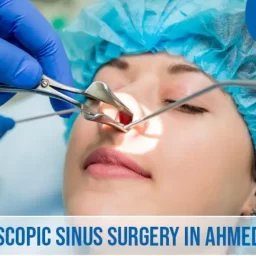
Endoscopic sinus surgery (often called FESS, functional endoscopic sinus surgery) is the most common approach today. The surgeon works through your nostrils with a thin endoscope and fine instruments, so there are no cuts on the face. The goal is to open the blocked drainage pathways, remove polyps or diseased tissue, and restore airflow and drainage so the sinuses can stay healthy.
Depending on your needs, the procedure may be combined with septum correction (septoplasty). Dr Manish Goyal’s clinic lists endoscopic sinus surgery with a debrider and laser, endoscopic septum surgery, and minimally invasive sinus balloon treatment among the procedures offered, and your surgeon will explain which approach suits your scan and symptoms.
What to expect: before, during and after
Before surgery
- Your surgeon explains the plan, benefits and risks, and you can ask anything
- You may be advised to stop certain medicines, such as blood thinners, but never stop a prescribed medicine on your own. Check with your doctor
- Routine blood tests and a fitness check are usually done
- You’ll be told when to stop eating and drinking beforehand
On the day
Most sinus surgeries are done under general anaesthesia, so you’re asleep and comfortable. The procedure can take around one to two hours, depending on how extensive it is. Many patients go home the same day or after a short stay.
Right after
Expect a blocked, stuffy nose, mild pressure, and some blood-tinged discharge for a few days. Some surgeons place soft packing or dissolvable materials in the nose. Pain is usually manageable with the medicines your doctor prescribes.
Recovery tips
- Use saline rinses exactly as directed. They’re essential for healing
- Avoid blowing your nose hard for the period your surgeon advises
- Avoid heavy lifting, strenuous exercise, and bending for a while
- Sleep with your head slightly raised
- Stay away from smoke, dust, and crowded places
- Attend every follow-up. Cleaning the nose in the clinic is a key part of healing
- Most people return to desk work within about a week, though healing continues over several weeks, and your surgeon will guide you
Risks to know about
Sinus surgery is generally safe in experienced hands, but like any surgery, it carries risks, including:
- Bleeding
- Infection
- Scarring or adhesions inside the nose
- Persistent or returning symptoms
- Changes in smell
- Rarely, injury near the eye or the skull base, or a leak of brain fluid
Your surgeon will discuss these openly before you decide. Choosing an experienced ENT and following aftercare closely lowers your risk.
Will it cure my sinus problem?
Honest answer: surgery opens the pathways, but it doesn’t remove the reason your sinuses got inflamed in the first place. Allergies, asthma, polyps, and smoke can still cause trouble afterwards. Most people notice clear improvement in breathing, pressure, and infections, but long-term success usually depends on continuing medicines, nasal rinses, and trigger control. Think of surgery as clearing the road, and ongoing care as keeping it clear.
Questions worth asking your surgeon
- Why do I need surgery, and what happens if I wait?
- What does my scan show?
- Which technique do you recommend, and why?
- What are the risks in my case?
- What will recovery look like, and when can I return to work?
- What care will I need afterwards, and how often are follow-ups?
Sinus surgery and ENT care at Aashwi ENT Hospital, Ahmedabad
Dr Mihir Mehta (MBBS, DLO, MS-ENT), with more than 23 years of experience, and Dr Manish Goyal (MS-ENT) see sinus and nasal patients at Aashwi ENT Hospital on Drive-In Road, Bodakdev, Ahmedabad. The hospital lists sinus surgery among its nose surgeries, with endoscopic nose and sinus diagnostics, CBCT nose imaging, allergy testing, an advanced operation theatre, and round-the-clock emergency, pharmacy, and pathology services under one roof. Patients across Ahmedabad and Gujarat can also visit its centres in Bopal, Chandlodiya and Gandhinagar.
Frequently Asked Questions
1. Is sinus surgery painful?
You’re under anaesthesia during the procedure. Afterwards, most people feel pressure and stuffiness rather than severe pain, and it’s usually well controlled with prescribed medicines.
2. How long does recovery take?
Many people return to light work in about a week, with full healing taking several weeks. Your surgeon will give personalised guidance, including when you can exercise or travel.
3. Will my sinus problem come back after surgery?
It can, particularly if allergies, polyps, or smoking continue. Good aftercare, nasal rinses, and regular follow-up reduce the chance.
4. Is endoscopic sinus surgery done through cuts on the face?
No. It’s done through the nostrils with a thin camera, so there are no external cuts.
5. Can I avoid surgery with medicines alone?
Often yes. Many people do well with medicines and nasal care. Surgery is considered when medical treatment hasn’t worked, or when there’s a clear blockage or growth.
6. Where can I get sinus surgery in Ahmedabad?
Aashwi ENT Hospital has centres at Drive-In Road (Bodakdev), Bopal, Chandlodiya and Gandhinagar. Call 99798 91672 to book. OPD runs Monday to Saturday, 10 am to 5 pm, with Sundays for emergencies only.
For more information, click below: