

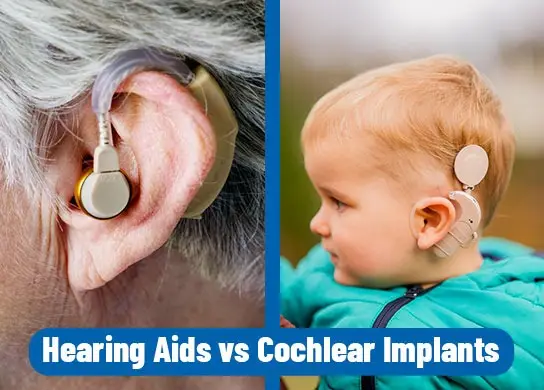
People with hearing loss can now take better control of their condition with the introduction of hearing technology. Many people are confused by the options available to them when it comes to hearing devices. Many people make comparisons between hearing aids and cochlear implants. Each is designed for specific types of hearing loss, with different levels of fidelity in sound, and for use in different types of lifestyles. Understanding these differences will enable the user to make a better choice in determining what will be the best solution to their hearing loss.
Hearing Aids vs Cochlear Implants: Choosing the Right Hearing Loss Solution
Fundamental Differences Between Hearing Aids and Cochlear Implants
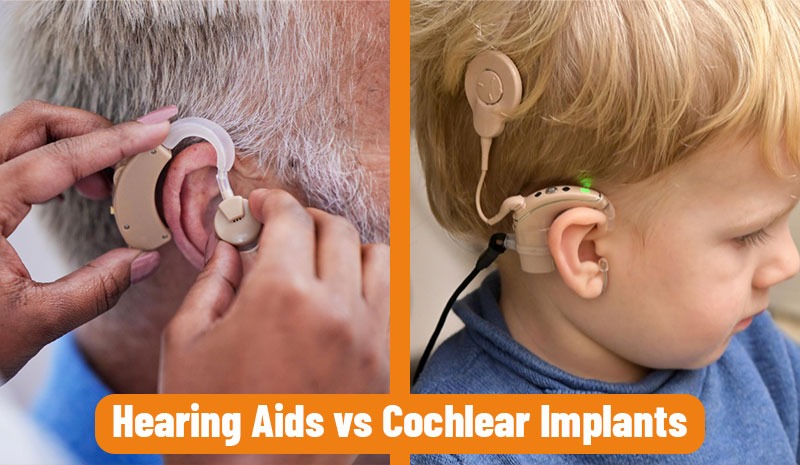
Hearing aids amplify sound, thereby improving the volume and clarity of sound for those with damaged hearing. In contrast, cochlear Implants work by stimulating the auditory nerve directly, bypassing the damaged inner ear structures.
Hearing aids work by amplifying sounds based on the remaining functionality of hair cells that are still functional within the cochlea. Cochlear implants use electronic means to provide the function of hair cells that are no longer functioning.
The two devices are intended to improve speech understanding; however, they use completely different methods.
Types of Hearing Loss Addressed by Each Hearing Device
If you have a mild to moderate hearing loss, you may benefit from using a hearing aid, and you could be a candidate for using a hearing aid if you have severe hearing loss, but hearing aids typically work better when your inner ear is still working well.
In some cases of severe hearing loss, cochlear implants may provide more benefit than hearing aids, and it may be necessary to consider cochlear implants if you are not able to obtain enough benefit from hearing aids.
Generally, conductive hearing loss can be treated with hearing aids or through other medical interventions, while sensorineural hearing loss typically requires more advanced options.
A hearing evaluation will help you determine what device is right for you.
![Hearing Aids vs Cochlear Implants]()
 Functional Benefits of Digital Hearing Aids
Digital hearing aids offer highly developed technology for enhancing the ability to hear. They not only make speech easier to comprehend but also reduce the distraction caused by other sounds.
The following are significant advantages of digital hearing aids:
- Amplification specific to individual hearing loss
- Directional microphones that help concentrate on one sound source at a time
- Noise-reducing technology
- Bluetooth capability for mobile phones and audio devices
- Rechargeable batteries
Digital hearing aids are helpful in everyday conversations. A digital hearing aid is appropriate for active adults because their performance can be fine-tuned regularly to fit each individual’s daily routine.
Digital hearing aids are non-invasive and easy to operate.
Clinical Benefits of Cochlear Implants
A cochlear implant transmits auditory signals to the auditory nerve and is effective in helping individuals who do not benefit from wearing a hearing aid.
The primary benefits of a cochlear implant are:
- Better Speech recognition
- Improved awareness of Sound
- Increased Communication Skills
- Greater Ability for Independence
- Significant Lifestyle Improvement
Cochlear implants also enable children to develop their language skills and adults to communicate more effectively. As a result of additional therapy and support, the benefits of cochlear implants can be improved over time.
The results obtained from a cochlear implant are closely correlated with the individual’s history of hearing loss and their level of commitment to ongoing rehabilitation.
Eligibility Criteria for Hearing Aids and Cochlear Implants
Eligibility depends on hearing test results and functional needs.
Hearing Aid Candidacy
- Mild to severe hearing loss
- Functional inner ear structures
- Ability to benefit from sound amplification
Cochlear Implant Candidacy
- Severe to profound hearing loss
- Limited benefit from hearing aids
- Healthy auditory nerve
- Motivation for rehabilitation
Cost, Maintenance, and Lifestyle Considerations
The cost of devices differs greatly, depending on what they are. Hearing aids are typically at a slightly lower cost at the beginning, but they must be purchased more often. Hearing aids need to be cleaned and replaced every few years, which requires regular cleaning and monitoring of batteries.
Cochlear implants typically are at a higher initial cost due to the expense associated with surgery and programming of the device. The long-term maintenance of cochlear implants is also predictable in nature.
In addition to cost differences, other considerations (like your lifestyle) also factor into choosing between the two types of hearing devices. Hearing aids generally allow for greater convenience and flexibility than cochlear implants. However, cochlear implants do provide hearing restoration that is more powerful and capable of handling severe hearing loss.
Insurance coverage for hearing aids and cochlear implants varies greatly depending on your region and the specific policy you have.
Long-Term Hearing Outcomes and Quality of Life Improvements
While both hearing aids and cochlear implants have a positive effect on social skills and communication, each person’s results will depend on how much hearing they have left and how often they use them.
Hearing aids are most effective during early development, helping to prevent the deterioration of sound from a lack of exposure.
Cochlear implants have transformed the lives of individuals with severe-to-profound hearing impairment. Many individuals are able to recognize speech clearly following program rehabilitation.
When beginning intervention as early as possible, the chances for achieving long-term success increase. Regular follow-up appointments are necessary to ensure optimal functionality.