
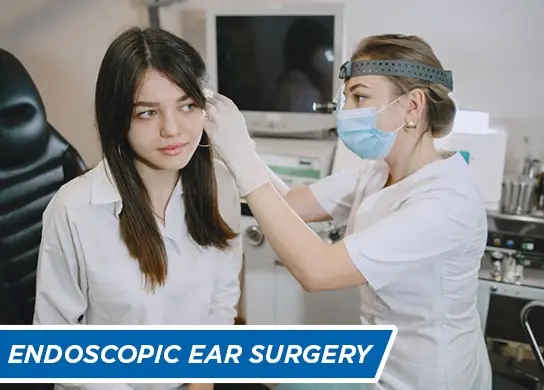
Endoscopic technology has transformed how doctors treat the ear. In the past, traditional ear operations required making large cuts in the skin and handling a lot of tissue. Now using an endoscope, doctors can perform complicated operations inside the middle ear with a high-definition picture of exactly what is going on through the ear canal.
Endoscopic ear surgery offers a safer, more precise, and quicker recovery time than traditional methods. So patients typically experience improved hearing with less pain than they would with older surgical techniques. Understanding how this ear surgery works will help you understand how doctors provide modern ear care to you.
Endoscopic Ear Surgery: Benefits, Safety, and Modern ENT Advances
Endoscopic ear surgery uses advanced visualization for precise treatment
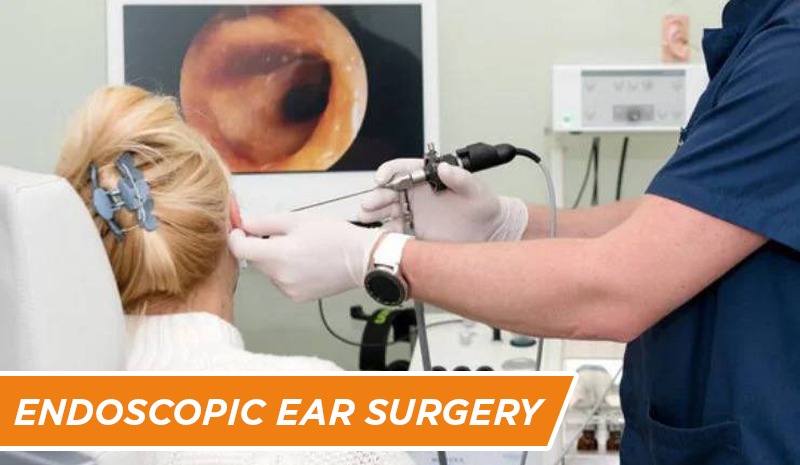
Endoscopic surgery of the ear uses high-definition cameras with thin rods (aka scopes). The scopes are inserted into the ear through the external canal.
The endoscope provides:
- A wide-angle view
- An enlarged view of the anatomy of the middle ear
- Clear views of difficult-to-see areas
Microscopes traditionally have a limited angle of view, whereas endoscopes enable surgeons to see at various angles and around obstacles, improving accuracy during delicate procedures on the ear.
Effective visualization results in decreased occurrence of residual disease. More structures remain healthy when the use of an endoscope is combined with other factors (e.g., preoperative planning, surgical experience, etc.).
![Endoscopic Ear Surgery]()
 Minimally invasive ear surgery treats many middle ear conditions
The use of endoscopes in minimally invasive ear surgery is indicated for several different disorders of the ear, many of which can impact both hearing and balance.
Examples of these types of conditions are commonly associated with:
- Chronic ear infections
- Tympanic membrane perforations
- Cholesteatoma
- Ossicular chain problems
- Middle ear tumors
By using endoscopic techniques, surgeons can perform these procedures without requiring large incisions or making large openings into the skull. As a result, all procedures are performed completely through the ear canal, which preserves the nearby tissues and anatomical structures.
Endoscopic ear surgery offers higher safety and better outcomes
When it comes to ear surgery, safety is a major concern. Endoscopic ear surgery, however, enhances the safety of this procedure by improving control and precision during the surgery.
The following are some of the major safety improvements related to endoscopic ear surgery:
- Less Trauma to Tissue
- Decreased Bleeding Risk
- Improved Disease Clearance
- Preservation of Hearing Structures
Surgeons can visually see the surgery from direct improvement at all times, thus reducing complication rates and increasing their confidence when operating. Patients also have fewer postoperative issues compared to when they undergo traditional open procedures.
Modern ENT procedures reduce pain and tissue damage
Advanced ENT surgeries aspire to minimize the effects on the body, and this procedure aligns with this aim.
Surgeons can do this without making external incisions. This means:
- Pain is minimized.
- Swelling is lessened.
- Scarring is minimal.
Patients will typically take fewer narcotics than with traditional procedures and may be discharged on the same day as the procedure itself. All of these factors contribute to the comfort and satisfaction of each patient.
Ear surgery success rates improve with endoscopic techniques
The success of ear surgery is reliant on total excision of disease/infection (removal of all infected tissue) and maintenance of the integrity of the middle ear structures. The endoscopic approach enhances these two elements of success.
The endoscopic approach allows ear surgeons to achieve greater success by:
- Visualising the margin of the disease more clearly
- Accurately repairing the eardrum
- Enhancing ossicular reconstruction procedures.
The benefits of treating the middle ear using endoscopic techniques are tremendous; surgeons can treat diseased tissues in areas where it is difficult for microscope-based techniques to access.
Many studies have documented comparable or improved audiologic results for endoscopically assisted ear surgeries compared to traditional microscopic surgeries. Furthermore, the long-term results have continued to support the use of endoscopic ear surgery.
Careful patient selection ensures effective surgical results
Not every patient is the right candidate for ear surgery; therefore, each patient’s case is individually assessed by an ENT physician.
Ideal candidates for surgery include those with:
- Localized middle ear disease;
- Small to moderate-sized cholesteatomas;
- Perforated eardrums;
- Defective ossicular chains.
In complex cases, an intensive approach may still employ both surgical and non-surgical methods. The ENT evaluation will indicate the most effective and least dangerous approach to treatment. Therefore, personalized treatment selection will provide patients with the best possible outcome.
Faster recovery makes endoscopic ear surgery patient-friendly
The time needed for recovery from surgery has decreased; patients can return to normal function much faster due to limited tissue disruption.
Benefits of faster recovery after surgery include:
- Shorter Hospitalization
- Faster Return to Normal Activities
- Decreased Risk of Infection
- Improved Cosmetic Results
The majority of individuals return to their pre-surgical lives in a matter of days. Improvement in hearing occurs over time as the patient continues to heal. Long-term success depends on regular follow-up visits.