
Many people suffer from allergic rhinitis (hay fever) throughout India. It produces sneezing, a blocked nose, and irritation in the eyes. Allergies have increased due to environmental pollution, exposure to dust, and changing weather conditions.
Ahmedabad residents typically have increased occurrences of allergies at certain times of the year. Early diagnosis and treatment will enhance comfort, along with reducing the likelihood of developing other health problems because of allergies.
Specialists at Aashwi ENT hospital provide patients with the best available care for their allergies using contemporary approaches to ENT patient care.
Allergic Rhinitis Causes in India: Symptoms and Relief Strategies
What Are the Main Allergic Rhinitis Causes in India?
Several environmental or genetic factors may cause the nasal cavity to be affected by an allergy.
Resorts to Urban Pollution: Urban air pollution causes irritation to the nasal cavity from the dust of air pollutants, creating irritation and triggering an allergic reaction.
Dust Mites: These microscopic organisms reside in the bedding and carpet of your home and may cause allergic reactions in sensitive individuals.
Pollen Dispersal by Plants: Trees, grasses, and weeds release pollen into the air at various points of the growing season.
Mold Spores: Mold spores will thrive in wet environments and may quickly cause an allergic reaction.
Animal Hair: The skin of animals sheds hair, which has the potential to cause an allergic reaction.
Family History: If someone in your family suffers from allergies, you may also have a higher chance of developing allergies.
Individuals living in India who understand the cause of their allergic rhinitis will also learn to identify and manage their allergy triggers.
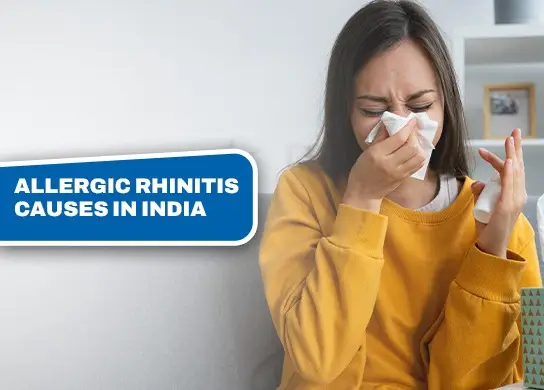
![Allergic Rhinitis Causes in India]()
 What Are the Common Hay Fever Symptoms in India?
Nasal allergies (Allergic Rhinitis) manifest themselves in the nose, throat, and eyes.
A few common complaints of hay fever from Indian patients are:
- Consistent sneezing
- Runny Noses
- Stuffy Nose
- Itchy Nose/Throat
- Watery Eyes
- Post-Nasal Dripping
- Tired or Headache
Symptoms will be worse when there is seasonal pollen in high numbers; for this reason, many confuse nasal allergies with the common cold.
If your symptoms persist for several weeks, you are usually experiencing nasal allergies.
What Triggers Seasonal Allergies in India?
When your immune system overreacts to small particles found in the air around you, this will result in your having a Seasonal Allergy.
The most common causes of seasonal allergies are:
Pollen Seasons: The arrival of spring (or monsoon) usually means higher pollen counts.
Construction Dust: Urban development produces a lot of dust & other small particles.
Air Pollution: The exhaust from vehicles contains chemicals that can irritate the nasal passages of people.
Weather Changes: Sudden temperature changes can trigger the production of certain immune responses.
Indoor Allergens: Dust mites & mold thrive in humid climates.
In Ahmedabad, many people suffer from seasonal allergies during the monsoon or winter months.
The severity of symptoms will usually be lessened if allergic individuals can avoid the trigger(s).
How Can I Get Quick Nasal Allergy Relief at Home?
Easy ways to reduce allergy symptoms through lifestyle changes
Stormie inhalation: Inhaling steam can help break up and loosen mucus to help keep nasal passages clear.
Saline nasal rinses: You can eliminate allergens from the nasal passages by rinsing them with a saline solution.
Keep your indoor air clean: By using air purifiers, you can reduce your exposure to dust, dirt, and pollen.
Wear a mask when outdoors: Masks can be effective in blocking pollution and pollen from entering your system.
Stay hydrated: Drinking fluid will help keep the mucus thin, which helps your body remove the mucus better.
These tips are useful for relieving mild symptoms of nasal allergies; however, persistent nasal allergies require professional medical care.
When Should I See an ENT Doctor for Allergic Rhinitis?
If you experience these symptoms that impact your everyday.
See a doctor for any of these:
- Nasal congestion that won’t go away
- Sinuses have been infected several times
- Frequent to very strong sneezing
- Interruptions to your sleep, or you just can’t get enough
- Losing the ability to smell
A doctor will evaluate your allergies and look into your nasal passage. After proper diagnosis, treatment will be affected.
Early treatment takes away the chances of acquiring sinusitis or chronic issues with breathing.
Can Allergic Rhinitis Become Chronic If Untreated?
If allergic rhinitis is not treated appropriately, there can be significant long-term adverse health consequences. Some examples include:
- Chronic sinus infections
- Nasal polyps
- Ear infections
- Disturbance of sleep
- Decreased concentration levels
Potential adverse effects in children may include breathing difficulties and poor performance at school.
By treating allergic rhinitis, long-term chronic ENT disorders can be avoided.
Where Can I Get Expert Allergy Treatment in Ahmedabad?
Allergic treatment through professional specialties.
Comprehensive ENT with Allergen Care
Includes:
- Testing and evaluating all types of allergens
- Allergy evaluation and management
- Endoscopic examination
- Medications for home care of allergies
- Sinus infection management
- Medicines used for the prevention of allergies
Personalized Treatment Plans:
Doctors create customized treatment plans based on your specific triggers and symptoms.
Early Intervention for Better Relief:
Timely diagnosis and appropriate treatment help provide faster relief and improve your ability to breathe comfortably.
Preventive Tips for Seasonal Allergies
Allergy symptoms can be prevented by following certain habits.
To reduce the risk of allergies, here are some easy-to-follow steps:
- Avoid being outside when pollen levels are high
- Regularly wash your bedding
- Keep the indoors as dry as possible
- Use air filtration systems in your home
- Wash your hands after participating in outdoor activities
Following these guidelines will contribute to effectively managing seasonal allergies long-term through ENT management services.