

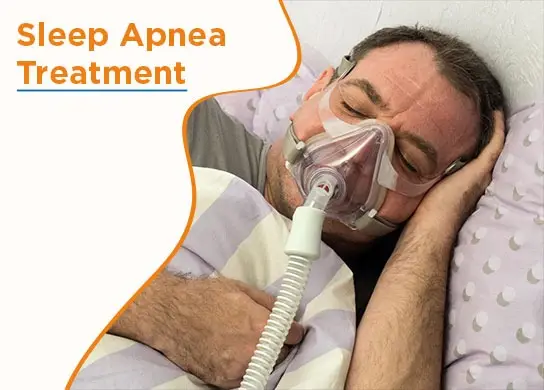
Although millions of individuals have slept for several hours, many still wake up feeling fatigued and drowsy. This is typically due to undiagnosed Obstructive Sleep Apnea, a disorder that causes repeated interruptions in breathing while sleeping, resulting in a continual strain on both the heart and brain, as well as the airway.
The treatments available today for Obstructive Sleep Apnea are no longer limited to basic devices or provide temporary relief. Now, with an ENT-based diagnostic test to determine the exact location of obstructions in the airway, treatments can be more accurately targeted and therefore more tolerable for patients to use. Understanding the fundamentals of how to identify who has Obstructive Sleep Apnea, what constitutes an appropriate treatment option, and how these treatment options will provide a long-term solution will help patients be able to achieve restorative sleep and ultimately promote their long-term health.
Sleep Apnea Treatment: Symptoms, Causes, and Advanced Options Explained
Chronic sleep disorder of sleep apnea is characterized by multiple interruptions of normal breathing patterns throughout the night. Each interruption causes a decrease in the body’s oxygen supply and disrupts its natural sleep patterns. Treating your sleep apnea can improve the quality of your nighttime rest and reduce your risk of developing other serious health-related complications.
![Sleep Apnea Treatment]()
 Sleep apnea treatment depends on early diagnosis and severity
People with sleep apnea are treated differently based on OSA (obstructive sleep apnea) and AHS (apparent hypoventilation syndrome). If they have OSA, it is due to the collapse of their airway(s) during sleep. We can use lifestyle changes or oral appliances in mild cases, while moderate to severe cases will require a CPAP machine or surgery to correct the problem.
We should diagnose ASAP so we can provide the best chance for a successful recovery. In most cases, treating sleep apnea requires the following:
- Sleep study (Polysomnography), which remains the best means for diagnosis;
- An ENT (Ear, Nose, Throat) specialist evaluation (also an absolute necessity);
- A combination of medical, mechanical, and surgical treatment options.
Obstructive sleep apnea symptoms often go unnoticed
Symptoms of obstructive sleep apnea often develop slowly over time and can take years before they are diagnosed. Most patients believe that feeling tired every day is normal and therefore ignore their symptoms.
Common symptoms of obstructive sleep apnea are:
- Chronic, loud snoring
- Pauses in breathing while sleeping
- Gasping for air or choking during sleep
- Feeling sleepy or fatigued during the day
- Headaches in the morning
- Inability to focus, poor memory
Children often exhibit behavior issues and poor learning ability. Without treatment, symptoms typically worsen and have a greater impact on the overall health of the person.
Snoring and apnea indicate serious sleep-related breathing issues
When a person’s body becomes relaxed during sleep, the tissue around the airway will vibrate, resulting in snoring. With sleep apnea, the airway can become completely or partially blocked.
Just because someone snores doesn’t mean they have sleep apnea; however, people with sleep apnea typically experience repeated pauses in their breathing. This causes them to be awakened many times throughout the night and can make their sleep unrefreshing.
If someone snores and feels tired during the day, they should seek treatment. Evaluation by an ENT physician (ear, nose, throat specialist) through an examination of the airway can provide valuable insight into blockage.
Airway obstruction is the core cause of sleep apnea
While sleeping, the throat’s muscles can become overly relaxed, causing an airway obstruction (a partially or completely blocked airflow). There are several different structural factors associated with an increased risk of developing an airway obstruction.
These include:
- Enlarged Tonsils and/or Adenoids
- A Deviated Nasal Septum
- A Nasal Blockage
- Airway Narrowing Due To Obesity
- Jaw And/or Tongue Positioning Issues
The ENT (Ear, Nose, Throat) Specialist will evaluate the location of the obstruction by utilizing endoscopic & imaging diagnostic tools. By engaging in targeted treatment, airflow and stability of sleep will significantly improve.
CPAP alternatives now offer effective long-term relief
Patients with moderate to severe sleep apnea typically use CPAP as the primary treatment, but long-term compliance can be difficult.
CPAP alternatives that are available to help patients achieve good results include:
- Oral Appliances: Dental devices (custom-made) that position the jaw and tongue for optimal airflow through the airway are effective for patients with mild to moderate OSA.
- Positional Therapy: Patients who have apnea that occurs only in the supine position can benefit from positional devices that help to support the airway and prevent collapse.
- Surgery: Surgical options (performed by ENT specialists) are available to correct anatomical blockages. These options include septoplasty, turbinate resection, and tonsillectomy.
- Advanced Airway Procedures: Some newer techniques also allow for a great deal of improvement in airway tone and stability with minimal downtime.
Today’s sleep apnea treatments utilize comfort, compliance, and individualized treatment as key factors to their effectiveness.
ENT specialists play a key role in sleep disorder treatment
ENT specialists are trained in airway anatomy and function. They assess the nasal cavity, throat, and laryngeal structures of patients.
ENT specialists are involved in:
- Identifying the level of obstruction in your airway.
- Managing your problems with nasal breathing.
- Performing surgical procedures to correct obstructions in the airway.
- Working with other specialists to manage your sleep.
ENT specialists can provide long-term solutions for many patients who cannot tolerate CPAP for sleep disorder treatment.
Untreated sleep apnea leads to serious health complications
Untreated obstructive sleep apnea (OSA) impacts your daily functioning and can potentially lead to medical complications associated with chronic low levels of oxygen in the body. Untreated OSA increases the likelihood of experiencing one or more of the following complications:
- Hypertension
- Cardiovascular disease and CVA (stroke)
- Type II diabetes
- Depression and anxiety
- Impaired memory
- Increased risk for accidents
Early intervention for sleep apnea greatly improves both quality of life and possible long-term outcomes.